
Midsummer nights
Hockney and Delius in Norway

Midsummer is upon us, and with it the long evenings of stubborn, lingering daylight.
Growing up, the window of my childhood bedroom faced North-North-West, with sweeping views out beyond the edges of the town and up towards Northumberland’s wilder inland reaches. I would often steal myself a last look between the curtains before bed at this time of year, to check on any remaining patches of light faraway on the horizon. There’s still light in the North, I would hope. And there always was. These words became a sort of summer refrain in my head, soothing me to sleep and later tumbling through my dreams.
Of course, I was not alone in my summer sky-watching, and not the first — nor the last — to be cast under the spell of northern summer light. When I heard recently of the death of David Hockney, I thought of his 2003 painting Midnight Sun, one of a series of watercolours inspired by the artist’s visits to Norway and the High North at the beginning of the century. I remember stumbling upon the work by chance in 2012 at the Nordnorsk Kunstmuseum in Tromsø, having followed my childhood quest for northern light to its natural conclusion in one of the long summer breaks from university.
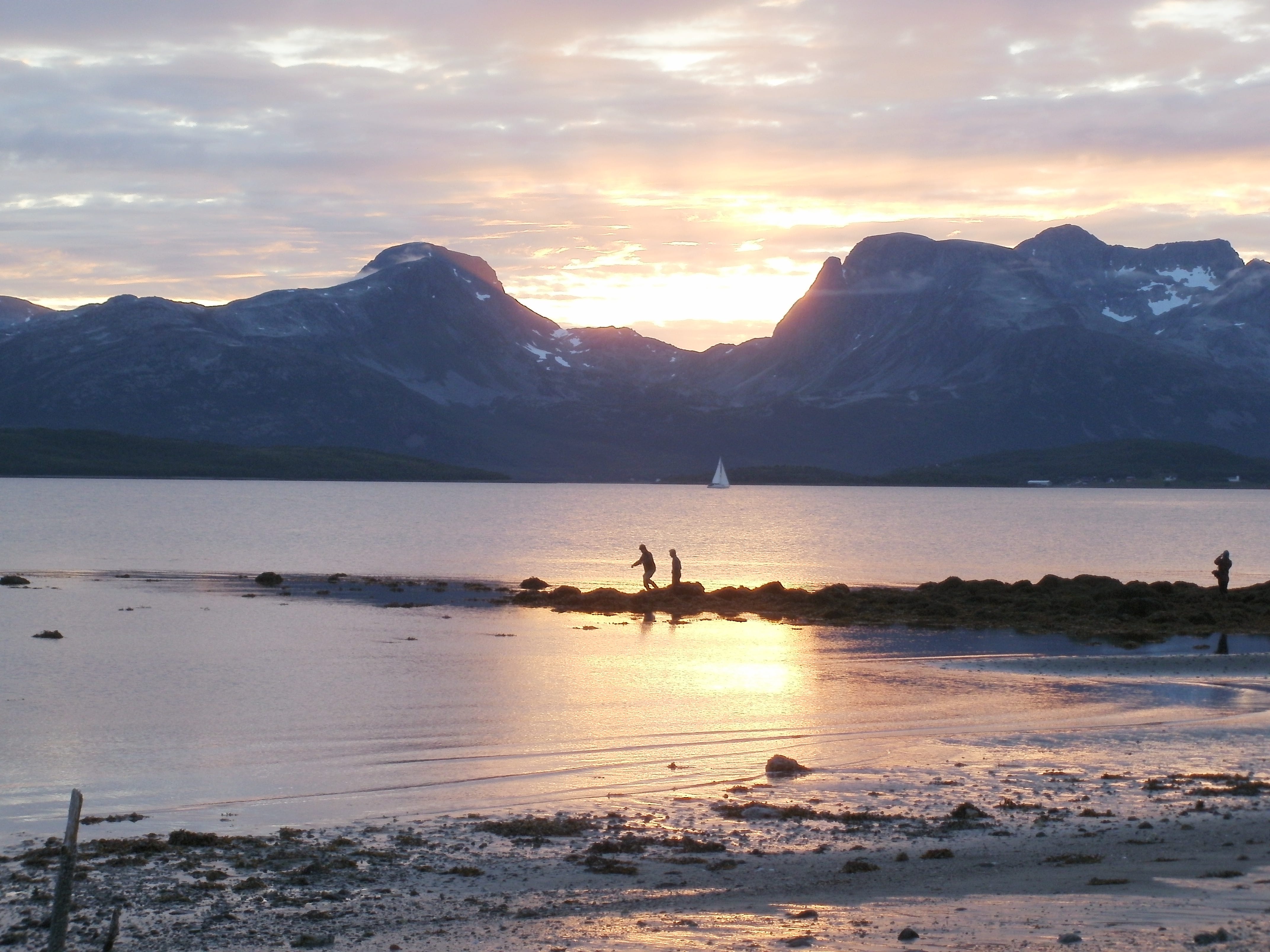
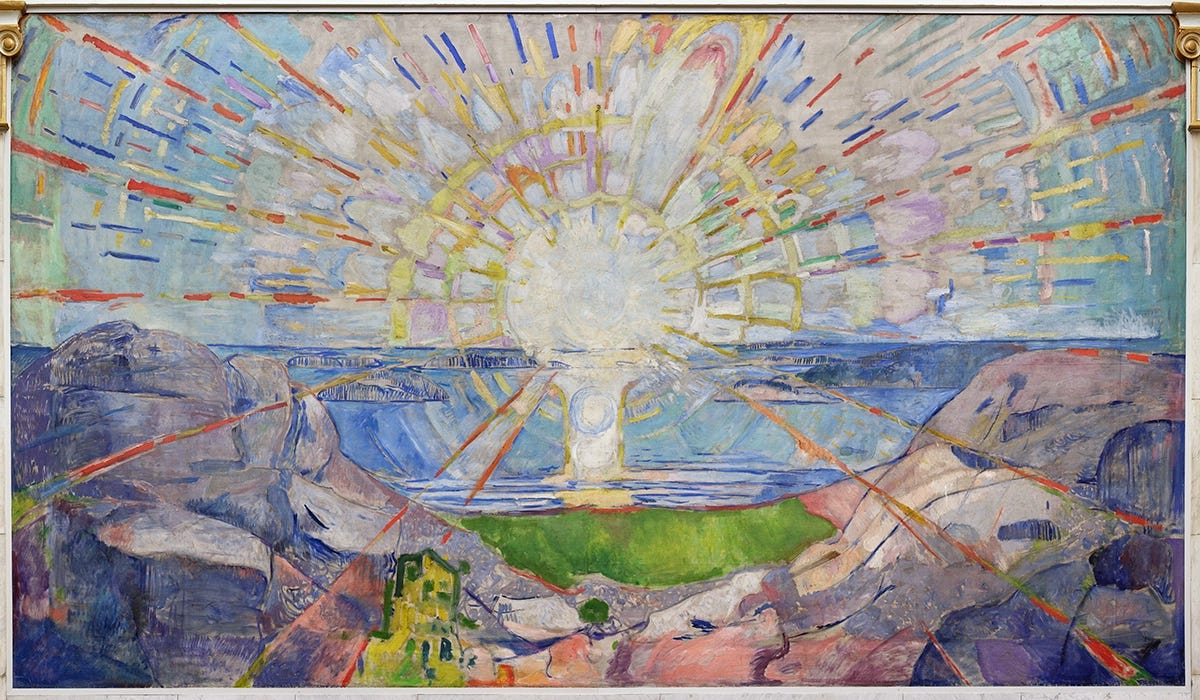
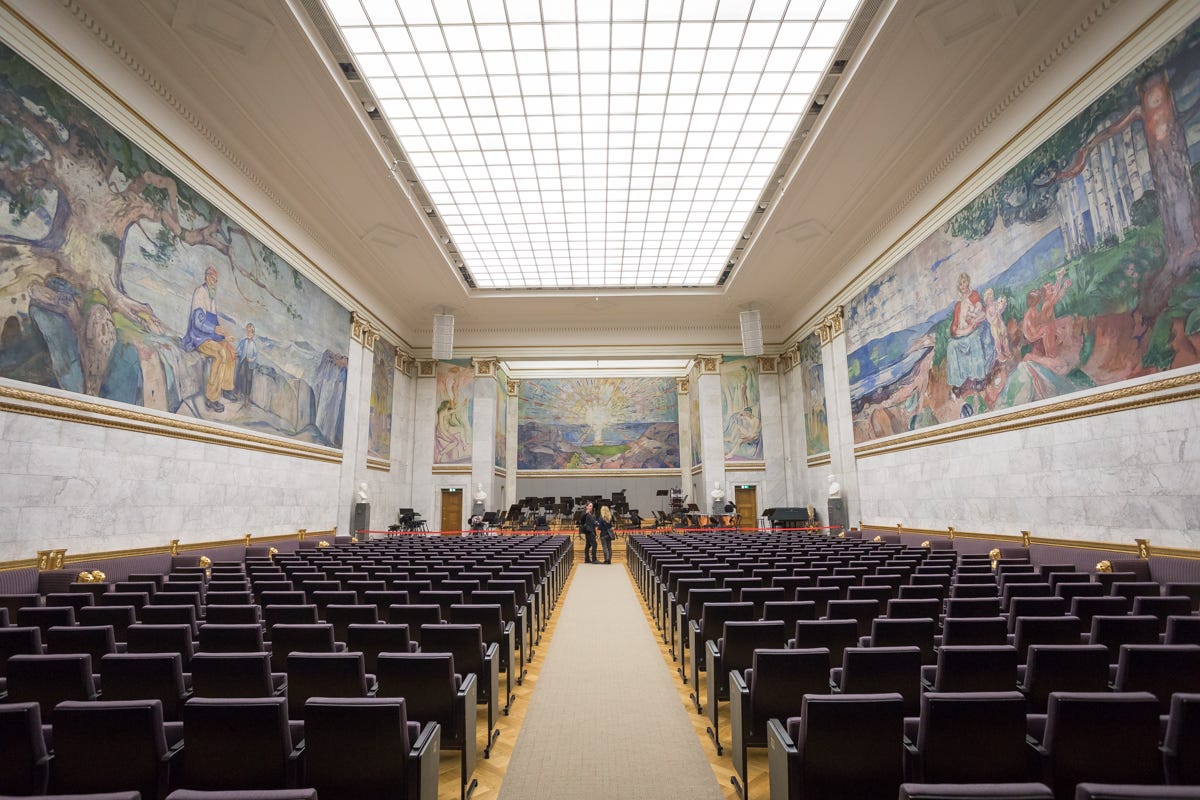
“There’s a place where you can watch the sun at midnight that is like the edge of the world,” Hockney recalled of his time in northern Norway in a 2009 interview with the Guardian. Further south, he had encountered Edvard Munch’s monumental painting The Sun in the University of Oslo’s decadent Aula, where it forms the centrepiece of eleven murals. It depicts a sunrise over the rocky archipelago off Kragerø, a coastal town in southern Telemark. Munch’s eye for the sun apparently made quite the impression on Hockney when he experienced the work in-situ:
"He'd got lines in it that cameras could never see, but we could – and of course in Oslo in June, Munch could look at the sun for a lot longer than Van Gogh could at Arles."1
The painting was no doubt an influence for Hockney’s own Midnight Sun, which sends out its yellow rays in some very Munchian lines.
.jpg)
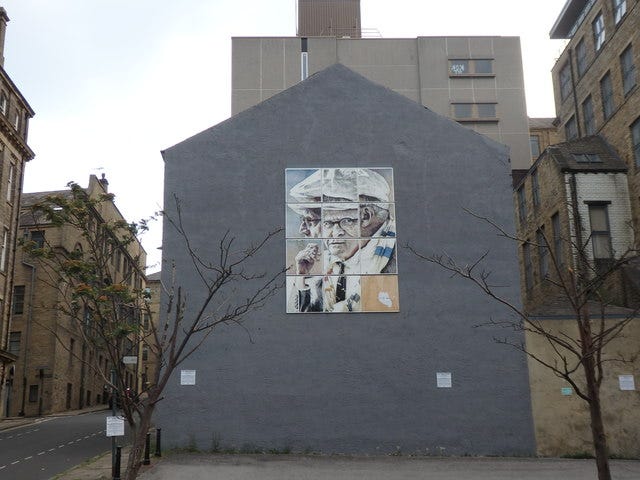
Hockney was himself a summer baby, and to mark his 80th birthday in July 2017 a portrait of him was installed on a gable end wall in his home city of Bradford. The portrait, by local artist Marcus Levine, is made entirely of painted nails and recalls Hockney’s polaroid period in the early 1980s. It has recently been restored and moved to a new indoor location in the city, but in its first years the artwork was on display in what is known as Little Germany, the city’s historic mercantile quarter. The area owes its name to the many German immigrants who helped transform it into a bustling commercial zone in the nineteenth century. Among them was wool merchant Julius Delius, father of one Fritz aka Frederick Delius (1862-1934) — composer and another of Bradford’s famous sons to be captured by the landscapes of Norway.
.jpg)
.jpg)
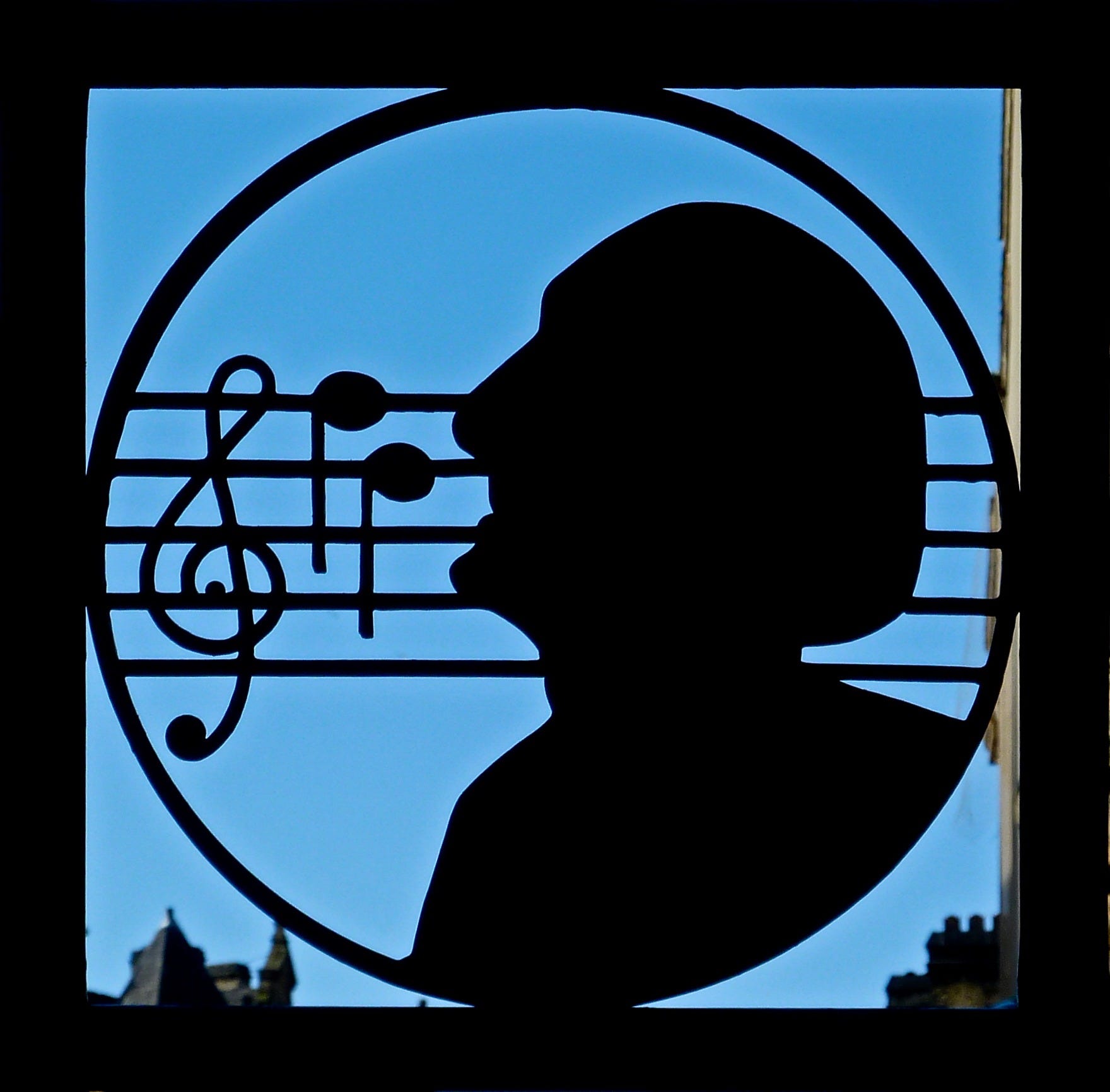
Like Hockney many decades later, the young Delius attended Bradford Grammar School. At home, heavy expectations that he would enter the family business in the wool trade were off-set by the joys of music — father Julius was a keen concert-goer and often hosted chamber concerts in the family home. It was the music of Edvard Grieg in particular which left a lasting impression. Of his first encounter with the Norwegian’s National Romanticism, Delius later recalled: “it was as if a breath of fresh mountain air had come to me.”2 Growing up amidst the smells and sounds of Victorian Bradford’s booming industries, this must have been quite some escapism.
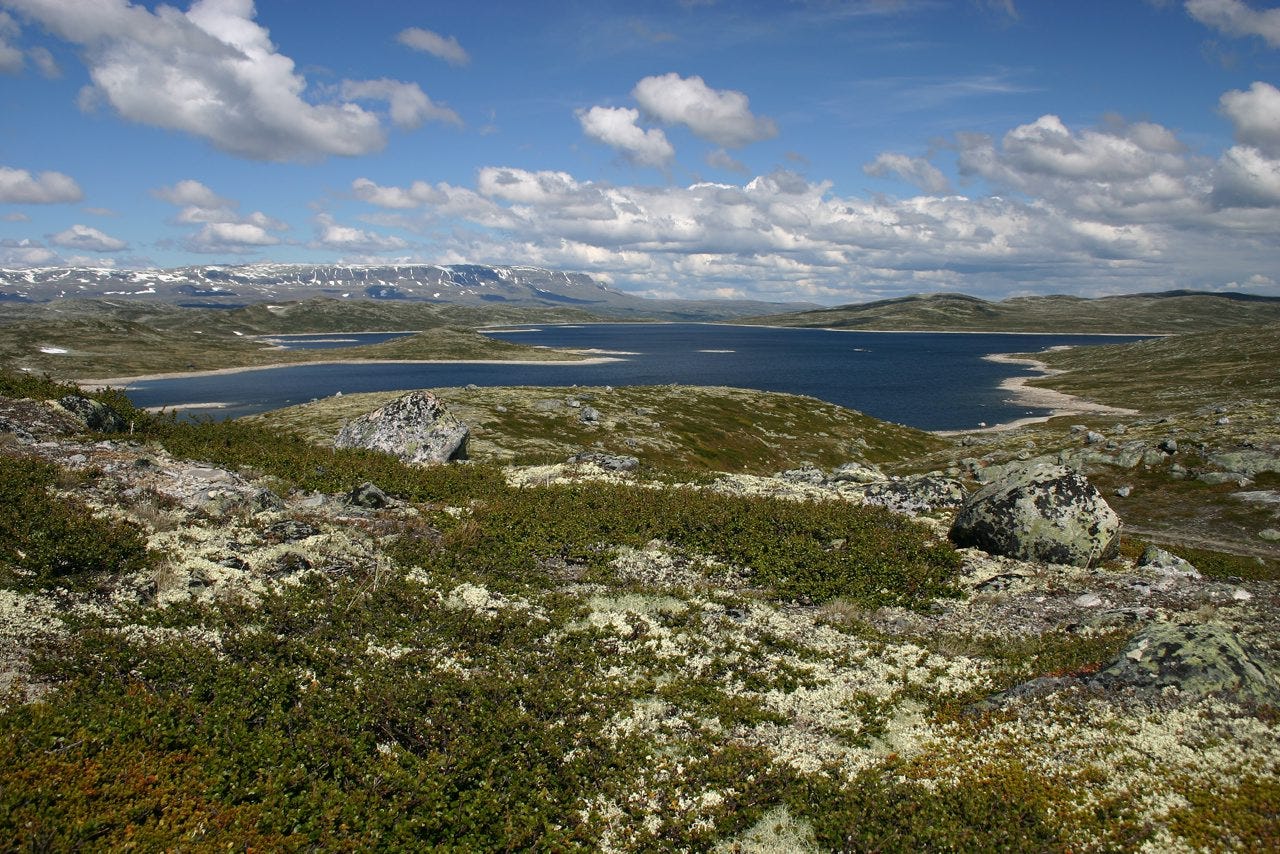
Like my own childhood hankering for the north, Delius’s boyhood dreams of Norway would soon be realised. The composer made some twenty visits to the country during his adult life, which his wife Jelka described as “the land of Fred’s constant longing”.3 Not only that, but his hero Grieg would in time become a dear friend. The two first met in Leipzig, when Delius was already acquainted with Norway, and before long they found themselves comparing notes of mountain trips among the country’s wild interior. Grieg was particularly surprised — perhaps impressed — that his new English friend camped out on Hardangervidda for fourteen days, the high mountain plateau at the heart of southern Norway. From then on he would refer to Delius, with affection, as the Hardangervidda Man.4

.jpg)
Appropriately, it was Delius’s symphonic poem Paa Vidderne (‘On the Mountains’), after Ibsen’s poem of the same name, which was his first composition to be performed in public, in Kristiania (Oslo) in 1891. Grieg and his wife Nina were in attendance, as was Edvard Munch with all likelihood, another close friend of Delius. A review of the work in a Norwegian newspaper — accompanied by a portrait of the composer drawn by a mysterious “E. M.” — wrote: “Through his admiration for our art and landscape he has come to love our country, and few foreigners know it and its people so well.”5
Later in life, both Delius and Hockney would also find inspiration closer to home — Delius in the traditional folksong Brigg Fair from mountain-free Lincolnshire, Hockney in the woods and wolds of East Yorkshire. Both landscapes are somewhat tame by comparison to the high drama of Norway and the Far North, and yet none the less interesting, if you know where to look.
As for myself, it’s a good few years since I’ve been to Norway, but for now I too have found my new spots of unlikely inspiration, here among the lowlands.
As quoted in the 2009 interview with the Guardian: https://www.theguardian.com/artanddesign/2009/nov/01/david-hockney-interview-tim-adams
Andrew J. Boyle, Delius and Norway (Boydell Press, 2017) p. 16.
Boyle, Delius and Norway, p. 282.
Boyle, Delius and Norway, p. 37.
Boyle, Delius and Norway, p. 89.
A terrific read, thank you, every day’s a school day!
I have nothing erudite to offer I’m afraid but…
Victoria Wood’s ‘Dinner Ladies’ Series 1 - Episode 6 ‘Night Shift’ produced two of the funniest lines ever written in British comedy.
Dolly (I think) is perusing the TV listings…
“Half past four, documentary. Is it true about the syphilitic Delius myth?”
“Delia Smith’s never got syphilis.”
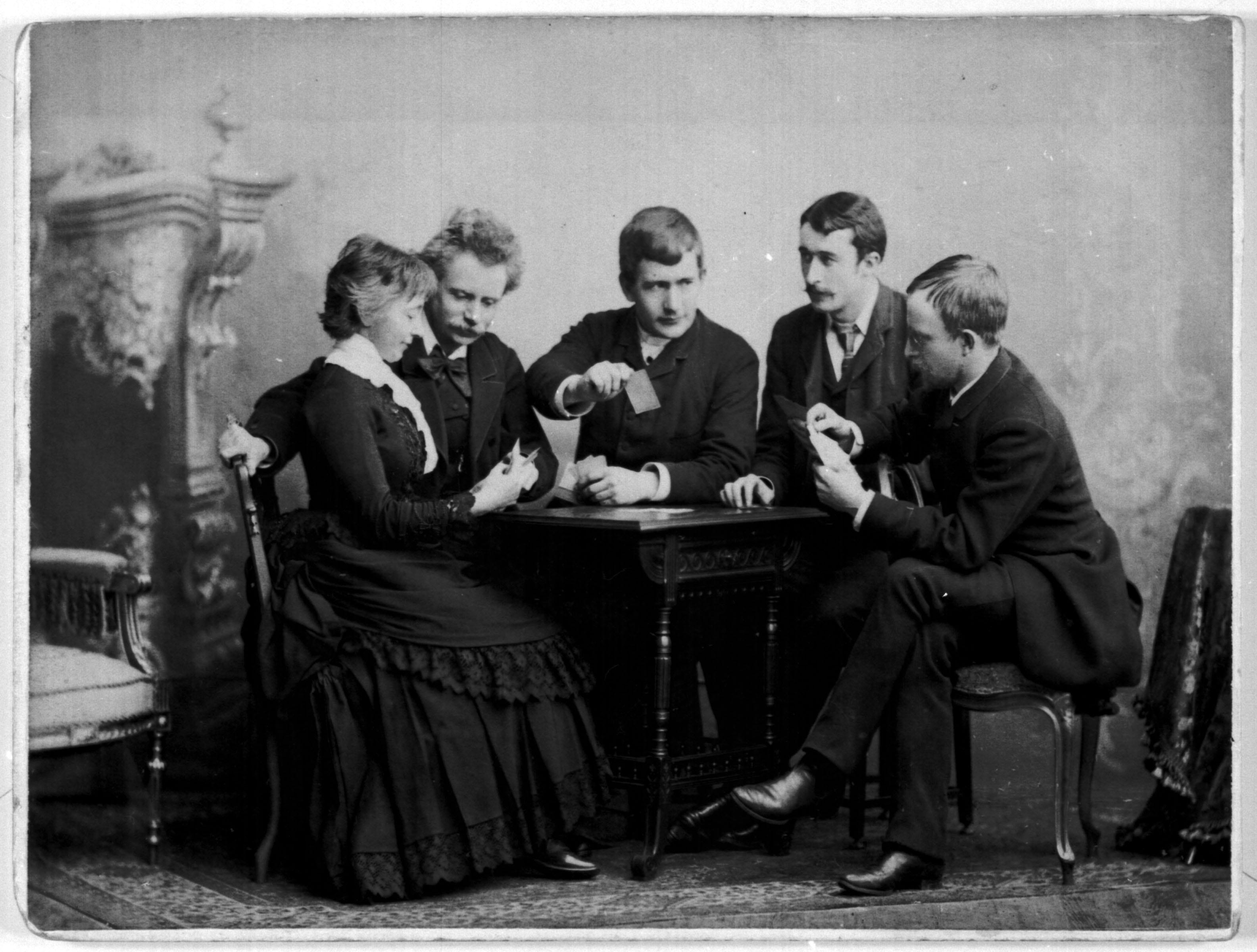
A great read, Hannah! I really liked how you described the friendship of these kindred spirits (Grieg and Delius) and was delighted to see that photo of Edvard and Nina Grieg playing cards with the other composers.